There is hardly a sport in the world as faceted as Formula 1. Right from its cars, the modern-day technological marvels; to the nip and tucks of a chicane and the two-second pit intervals, F1 gives you no time to blink. Constant updating of guidelines from FIA, followed by innovative brainstorming by team engineers, have ensured that Formula 1 has maintained its position at the zenith of the motorsport world.
Come to think of it, F1 constantly challenges the threshold. It is their constant pursuit to improve; to get faster, to work economically, to outfox rivals. This pursuit makes way for a blurred distinction between motorsport and madness. And this blurred distinction, from time to time, pushes the sport towards madness. The San Marino Grand Prix, 1994 is a perfect example.
The Italian Grand Prix was the third race on the calendar and Schumacher, leading the Drivers’ Championship with 20 points, was already giving glimpses of his erudite abilities. Few of the other stalwarts in the hunt for the Championship were Damon Hill, Aryton Senna and Gerhard Berger. Unlike current races, the Italian Grand Prix followed a different three-day schedule; with a first qualifying session on Friday, a second qualifying session on Saturday and the Main Race on Sunday. The first accident took place on Friday, 29th April.
Jordan driver Rubens Barrichello, or ‘Rubinho’ as he was popularly known, was a season old in F1 and was sitting at a modest second position in the Drivers’ Championship, albeit with a deficit of 13 points to Schumacher. During the first session, ‘Rubinho’ heading to Variante Bassa corner, understeered and hit the kerb. This resulted in his car being flung into the air towards the tyre-barrier at 140 mph. The tyre-barriers, unlike today, did not have a sheet covering over them. The sheet covering helps in absorbing the blow, by co-joining multiple tyre clusters. In absence of the sheet, the car ricocheted off the tyre cluster that it hit. Barrichello was knocked unconscious and the car toppled to a halt. The medical team delivered the treatment on the spot and ‘Rubinho’ was airlifted to a hospital. He was lucky to end up with only a broken nose but was ruled out for the remainder of the race weekend.

The drivers were able to shake-off this accident but what followed over the next two days, jolted not only the drivers but the entire motorsports world, to its very core.
Twenty minutes into the second qualifying session, tragedy struck Roland Ratzenberger. Driving his Simtek, the Austrian misjudged a chicane and collided head-first with a concrete barrier. The grass-covered run-off area, adjacent to the track, could only partly slow down his momentum. His car slid along the wall for close to 20-25 metres before coming to a halt. The entire left portion of the car had been obliterated. The first glimpse of Roland’s head hanging, with his body lying motionless, sent shock-waves across the world. The session was stopped. Ratzenberger too, was airlifted to Maggiore Hospital where he eventually succumbed to his injuries. This was a hard blow. The accident, once again raised the incontrovertible question – Are we taking it too far? Further analysis of the accident revealed that Roland had damaged his front wing one lap before the accident, thereby reducing his ability to control the car. Roland decided not to fix it and continued with his qualifying lap. It was his reluctance to return to the box that proved fatal.

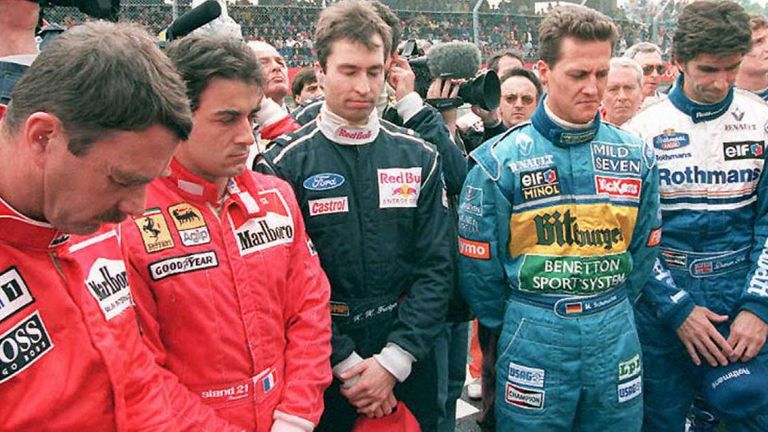
The following day, the Grand Prix Drivers Association was re-formed. A body that would work for the safety and well-being of F1 drivers and alleviate any issue drivers may face. Senna, Berger and Schumacher were the first directors.
But the catastrophe had still not passed.
On the starting grid, Senna took the Pole followed by Schumacher and Berger. Just as the race started, Portugese driver JJ Lehto, who started fifth, saw his car malfunction and stop. Pedro Lamy, who was starting way behind at the 22nd place, was blinded to Lehto’s motionless car stuck in the middle of the track. Lamy, in full steam, rammed into Lehto’s car. The debris from the impact flew over the protective fence, into the spectator area. 8 people including a security personnel were injured. The safety car was introduced in the first lap itself, while the race crew cleared the track of all debris. Normal proceedings continued from the fifth lap.
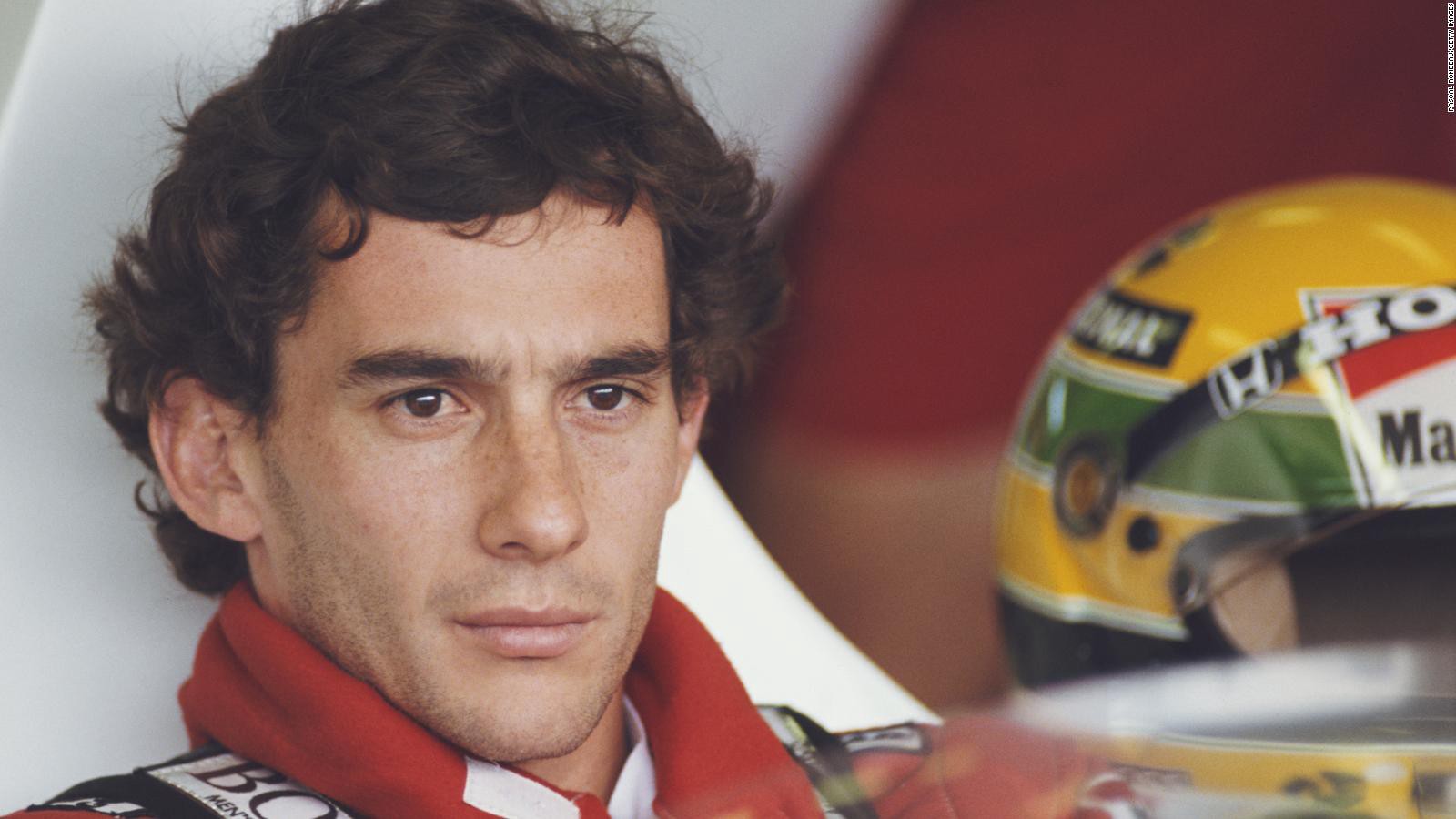
But just when the racers were settling in, F1 witnessed a crash that completely changed its views on driver safety. Senna, in the following lap, charging through the Tamburello corner, could not control his car and crashed into the concrete wall. This was the fourth major accident of the weekend. This one, undoubtedly, is the most talked about. A helicopter shot captured a slight movement from Senna in his seat, giving some hope to viewers that he might be all right. The scenes were horrific to the extent that BBC had to switch its feed cameras to the pitlane. Senna was moved from the remains of his Williams car and flown to Maggiore Hospital. Around 6, the same evening, Senna was pronounced dead. The cause, as ascertained by the autopsy, were multiple injuries to the head caused by severe impact. A second fatality in as many days.
The race had already seen a subdued end. Once restarted, Schumacher managed a comfortable win with Nicola Larini and Mika Hakkinen taking the podium places. In memory of Ratzenberger, who was the only confirmed casualty till then, it was decided that no champagne will be popped during the podium ceremony.
The legendary BBC commentator Murray Walker termed it as “The blackest day of Grand Prix history I can remember.” Sid Watkins, who was the medical in-charge, revealed later that Senna had been distraught after Roland’s demise. Watkins even persuaded Senna to not race the following day. The three-time world champion, while weeping, replied: “Sid, there are certain things over which we have no control. I cannot quit, I have to go on.” What was even more heartbreaking, was the fact that Senna had carried an Austrian flag during the race. He had intended to offer a tribute to Ratzenberger, had he won the race. The flag was recovered from the wreckage of his car. And in the span of a couple of days two careers; one of a stellar champion, another of a promising rookie in his debut season, were ended. They left a great many questions to answer. Are the tracks safe to drive on? Are the race cars durable enough? Are the safety regulations effective?
Following these events, a ton of work was put in to make F1 safer. The Imola circuit layout was immediately altered with a number of sharp turns and chicanes being modified. The car design was also heavily reworked to incorporate a host of changes to improve the safety standards. Pitlane exits were refurbished too. Safety cars, which were earlier frowned upon, became musts for every race. The run-off areas, gravel traps and tyre-barriers were analyzed in depth to make them more effective. As the years rolled on, further technically tested systems such as HANS(Head and Neck Support System) were implemented into the sport.
More than two decades later, F1 remains a cut-throat, brazen competitive bonanza where teams vie to outwit each other in a nine-month-long gruelling calendar. The safety standards have improved manifold, there are stricter and better laid out instructions and Senna & Ratzenberger continue being the beacons that guide improvement and betterment of the sport.
 Sports Lane